


Channel 实现原理
2445 字
12 分钟
Channel 实现原理
1. 核心数据结构
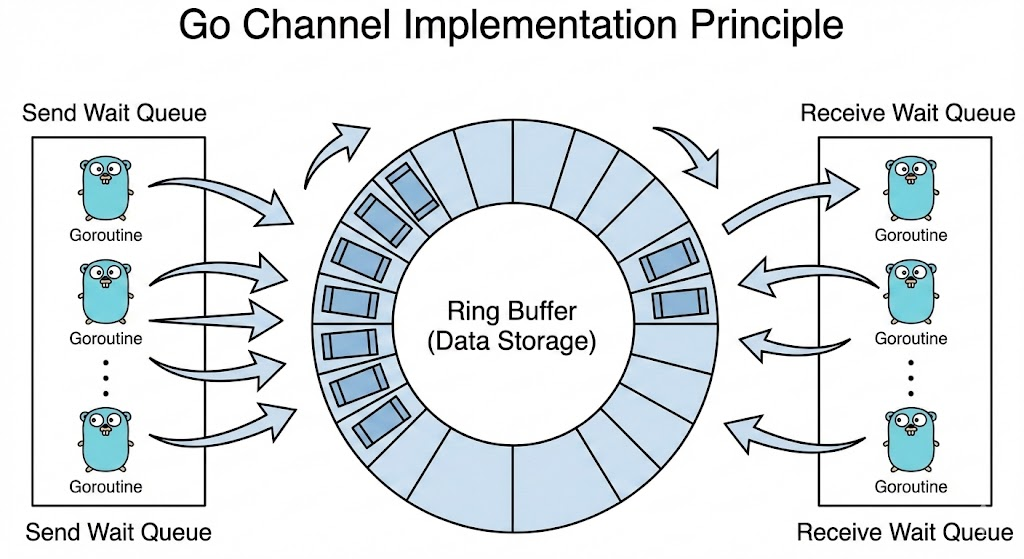
数据存储在一个环形数组中,并且维护了两个等待队列,分别用于存放因读写操作而阻塞的协程。
1.1 hchan
type hchan struct { qcount uint // total data in the queue dataqsiz uint // size of the circular queue buf unsafe.Pointer // points to an array of dataqsiz elements elemsize uint16 closed uint32 elemtype *_type // element type sendx uint // send index recvx uint // receive index recvq waitq // list of recv waiters sendq waitq // list of send waiters
lock mutex}hchan:channel 数据结构。
qcount:当前 channel 中存在多少个元素;dataqsize: 当前 channel 能存放的元素容量;buf:channel 中用于存放元素的环形缓冲区;elemsize:channel 元素类型的大小;closed:标识 channel 是否关闭;elemtype:channel 元素类型;sendx:发送元素进入环形缓冲区的 index;recvx:接收元素所处的环形缓冲区的 index;recvq:因接收而陷入阻塞的协程队列;sendq:因发送而陷入阻塞的协程队列。
1.2 waitq
type waitq struct { first *sudog last *sudog}waitq:阻塞的协程队列。
first:队列头部last:队列尾部
1.3 sudog
type sudog struct { g *g
next *sudog prev *sudog elem unsafe.Pointer // data element (may point to stack)
isSelect bool
c *hchan}sudog:用于包装协程的节点。
g:goroutine,协程;next:队列中的下一个节点;prev:队列中的前一个节点;elem: 读取/写入 channel 的数据的容器;isSelect:标识当前协程是否处在 select 多路复用的流程中;c:标识与当前 sudog 交互的 chan.
2. 构造器函数
几种类型的 channel
func makechan(t *chantype, size int) *hchan { elem := t.elem
// ... mem, overflow := math.MulUintptr(elem.size, uintptr(size)) if overflow || mem > maxAlloc-hchanSize || size < 0 { panic(plainError("makechan: size out of range")) }
var c *hchan switch { case mem == 0: // Queue or element size is zero. c = (*hchan)(mallocgc(hchanSize, nil, true)) // Race detector uses this location for synchronization. c.buf = c.raceaddr() case elem.ptrdata == 0: // Elements do not contain pointers. // Allocate hchan and buf in one call. c = (*hchan)(mallocgc(hchanSize+mem, nil, true)) c.buf = add(unsafe.Pointer(c), hchanSize) default: // Elements contain pointers. c = new(hchan) c.buf = mallocgc(mem, elem, true) }
c.elemsize = uint16(elem.size) c.elemtype = elem c.dataqsiz = uint(size)
lockInit(&c.lock, lockRankHchan)
return}- 判断申请内存空间大小是否越界,
mem大小为 element 类型大小与 element 个数相乘后得到,仅当无缓冲型 channel 时,因个数为 0 导致大小为 0; - 根据类型,初始 channel,分为 无缓冲型、有缓冲元素为 struct 型、有缓冲元素为 pointer 型 channel;
- 倘若为无缓冲型,则仅申请一个大小为默认值 96 的空间;
- 如若有缓冲的 struct 型,则一次性分配好
96 + mem大小的空间,并且调整 chan 的buf指向mem的起始位置; - 倘若为有缓冲的 pointer 型,则分别申请 chan 和
buf的空间,两者无需连续; - 对 channel 的其余字段进行初始化,包括元素类型大小、元素类型、容量以及锁的初始化。
3. 写流程
3.1 两类异常情况处理
func chansend1(c *hchan, elem unsafe.Pointer) { chansend(c, elem, true, getcallerpc())}
func chansend(c *hchan, ep unsafe.Pointer, block bool, callerpc uintptr) bool { if c == nil { gopark(nil, nil, waitReasonChanSendNilChan, traceEvGoStop, 2) throw("unreachable") }
lock(&c.lock)
if c.closed != 0 { unlock(&c.lock) panic(plainError("send on closed channel")) }
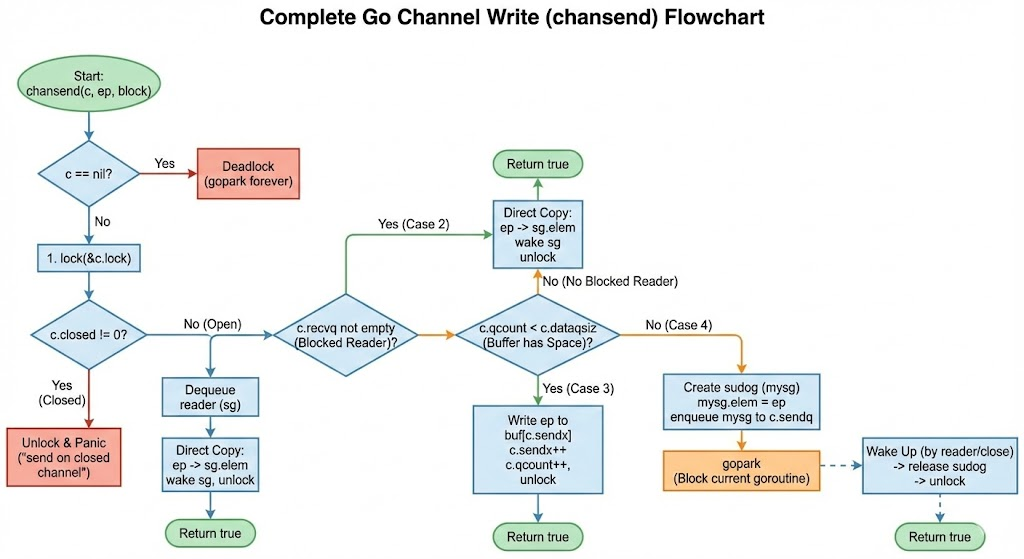
// ... // ...}- 对于未初始化的 chan,写入操作会引发死锁;
- 对于已关闭的 chan,写入操作会引发 panic。
3.2 case1:写时存在阻塞读协程
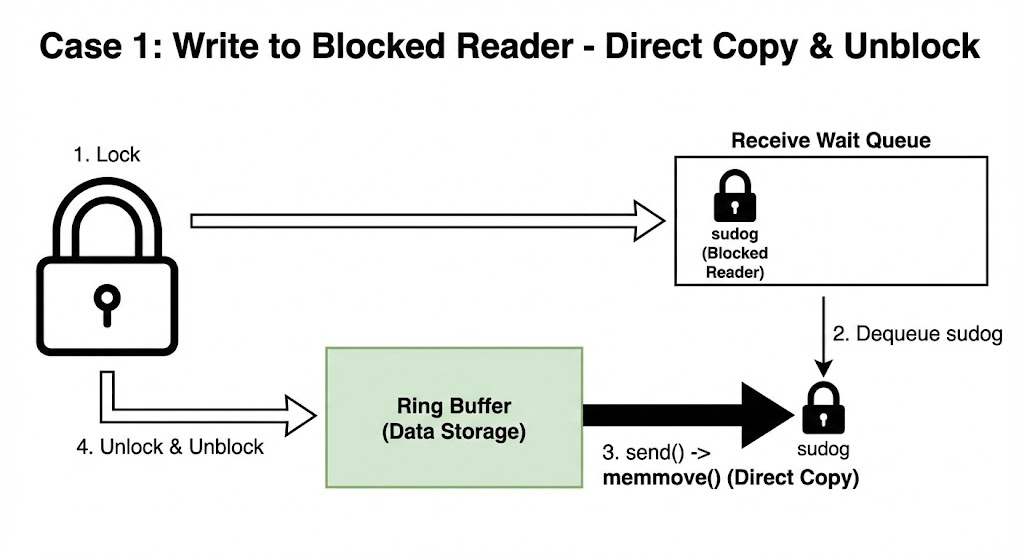
直接写入阻塞读协程
func chansend(c *hchan, ep unsafe.Pointer, block bool, callerpc uintptr) bool { // ... lock(&c.lock) // ... if sg := c.recvq.dequeue(); sg != nil { // Found a waiting receiver. We pass the value we want to send // directly to the receiver, bypassing the channel buffer (if any). send(c, sg, ep, func() { unlock(&c.lock) }, 3) return true } // ...}- 加锁;
- 从阻塞度协程队列中取出一个 goroutine 的封装对象
sudog; - 在
send方法中,会基于memmove方法,直接将元素拷贝交给sudog对应的 goroutine; - 在
send方法中会完成解锁动作。
3.3 case2:写时无阻塞读协程但环形缓冲区仍有空间
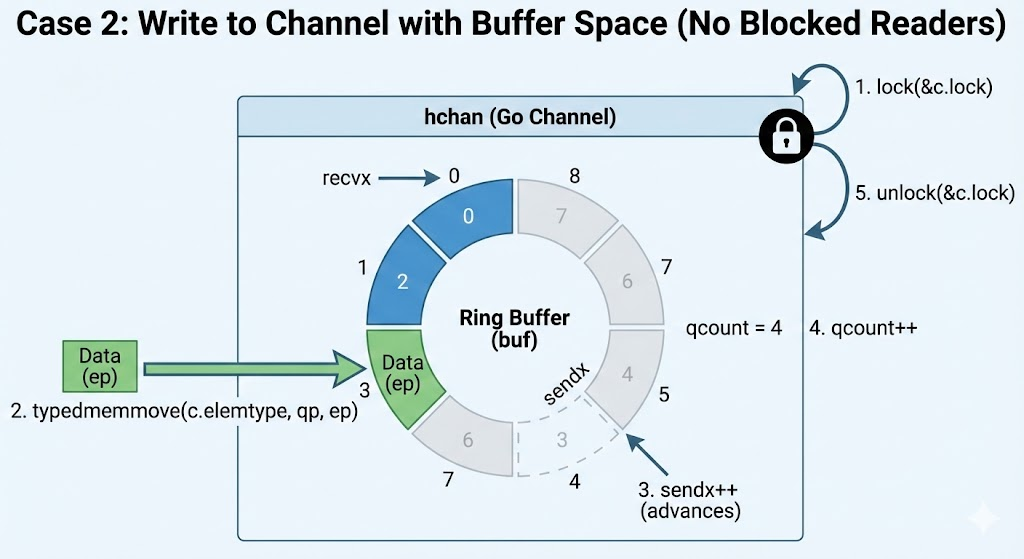
写入环形缓冲区
func chansend(c *hchan, ep unsafe.Pointer, block bool, callerpc uintptr) bool { // ... lock(&c.lock) // ... if c.qcount < c.dataqsiz { // Space is available in the channel buffer. Enqueue the element to send. qp := chanbuf(c, c.sendx) typedmemmove(c.elemtype, qp, ep) c.sendx++ if c.sendx == c.dataqsiz { c.sendx = 0 } c.qcount++ unlock(&c.lock) return true }
// ...}- 加锁;
- 将当前元素添加到环形缓冲区
sendx对应的位置; sendx++;qcount++;- 解锁,返回。
3.4 case3:写时无阻塞读协程且环形缓冲区无空间
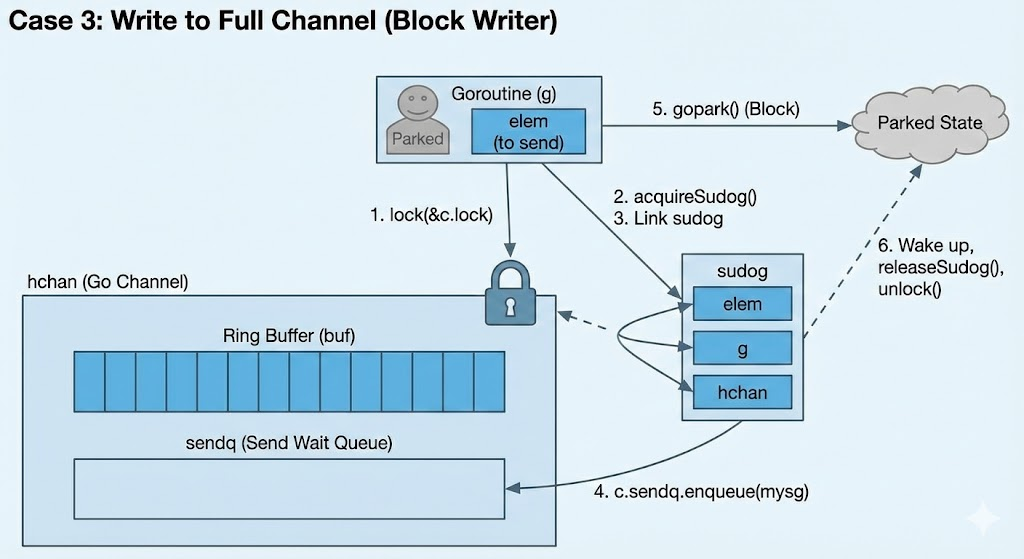
阻塞写协程
func chansend(c *hchan, ep unsafe.Pointer, block bool, callerpc uintptr) bool { // ... lock(&c.lock)
// ... gp := getg() mysg := acquireSudog() mysg.elem = ep mysg.g = gp mysg.c = c gp.waiting = mysg c.sendq.enqueue(mysg)
atomic.Store8(&gp.parkingOnChan, 1) gopark(chanparkcommit, unsafe.Pointer(&c.lock), waitReasonChanSend, traceEvGoBlockSend, 2)
gp.waiting = nil closed := !mysg.success gp.param = nil mysg.c = nil releaseSudog(mysg) return true}- 加锁;
- 构造封装当前 goroutine 的
sudog对象; - 完成指针指向,建立
sudog、goroutine、channel 之间的指向关系; - 把
sudog添加到当前 channel 的阻塞写协程队列中; - park 当前协程;
- 倘若协程从 park 中被唤醒,则回收
sudog(sudog能被唤醒,其对应的元素必然已经被读协程取走); - 解锁,返回。
3.5 写流程整体串联
写流程串联
4. 读流程
4.1 异常 case1:读空 channel
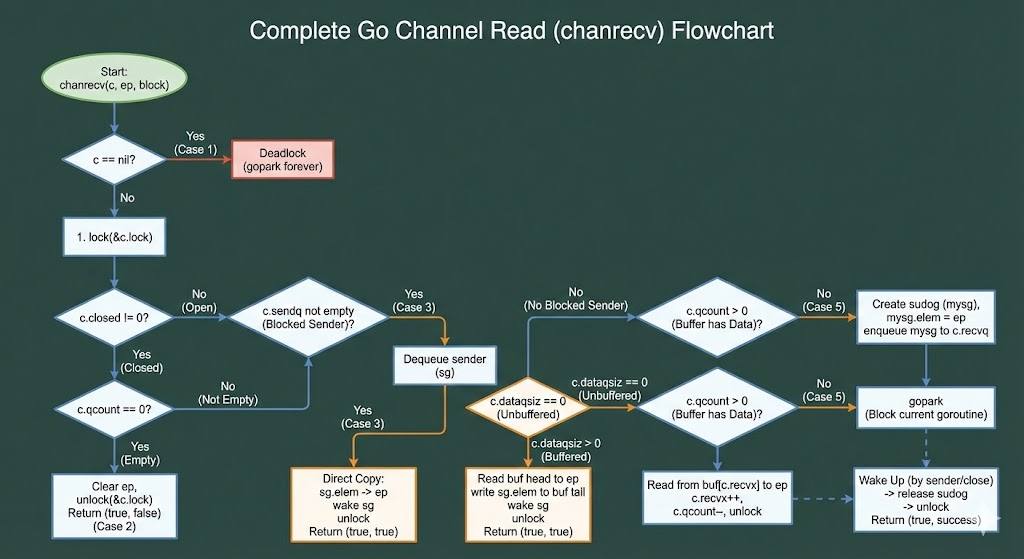
func chanrecv(c *hchan, ep unsafe.Pointer, block bool) (selected, received bool) { if c == nil { gopark(nil, nil, waitReasonChanReceiveNilChan, traceEvGoStop, 2) throw("unreachable") } // ...}- park 挂起,引起死锁。
4.2 异常 case2:channel 已关闭且内部无元素
func chanrecv(c *hchan, ep unsafe.Pointer, block bool) (selected, received bool) {
lock(&c.lock)
if c.closed != 0 { if c.qcount == 0 { unlock(&c.lock) if ep != nil { typedmemclr(c.elemtype, ep) } return true, false } // The channel has been closed, but the channel's buffer have data. }
// ...}- 直接解锁返回即可。
4.3 case3:读时有阻塞的写协程
从阻塞写协程中读取
func chanrecv(c *hchan, ep unsafe.Pointer, block bool) (selected, received bool) {
lock(&c.lock)
if sg := c.sendq.dequeue(); sg != nil { recv(c, sg, ep, func() { unlock(&c.lock) }, 3) return true, true } // ...}- 加锁;
- 从阻塞写协程队列中获取到一个写协程;
- 倘若 channel 无缓冲区,则直接读取写协程元素,并唤醒写协程;
- 倘若 channel 有缓冲区,则读取缓冲区头部元素,并将写协程元素写入缓冲区尾部后唤醒写写成;
- 解锁,返回。
4.4 case4:读时无阻塞写协程且缓冲区有元素
从环形缓冲区读取
func chanrecv(c *hchan, ep unsafe.Pointer, block bool) (selected, received bool) { // ... lock(&c.lock) // ... if c.qcount > 0 { // Receive directly from queue qp := chanbuf(c, c.recvx) if ep != nil { typedmemmove(c.elemtype, ep, qp) } typedmemclr(c.elemtype, qp) c.recvx++ if c.recvx == c.dataqsiz { c.recvx = 0 } c.qcount-- unlock(&c.lock) return true, true } // ...}- 加锁;
- 获取到
recvx对应位置的元素; recvx++qcount--- 解锁,返回。
4.5 case5:读时无阻塞写协程且缓冲区无元素
阻塞读协程
func chanrecv(c *hchan, ep unsafe.Pointer, block bool) (selected, received bool) { // ... lock(&c.lock) // ... gp := getg() mysg := acquireSudog() mysg.elem = ep gp.waiting = mysg mysg.g = gp mysg.c = c gp.param = nil c.recvq.enqueue(mysg) atomic.Store8(&gp.parkingOnChan, 1) gopark(chanparkcommit, unsafe.Pointer(&c.lock), waitReasonChanReceive, traceEvGoBlockRecv, 2)
gp.waiting = nil success := mysg.success gp.param = nil mysg.c = nil releaseSudog(mysg) return true, success}- 加锁;
- 构造封装当前 goroutine 的
sudog对象; - 完成指针指向,建立
sudog、goroutine、channel 之间的指向关系; - 把
sudog添加到当前 channel 的阻塞读协程队列中; - park 当前协程;
- 倘若协程从 park 中被唤醒,则回收
sudog(sudog能被唤醒,其对应的元素必然已经被写入); - 解锁,返回。
4.6 读流程整体串联
读流程串联
5. 阻塞与非阻塞模式
在上述源码分析流程中,均是以阻塞模式为主线进行讲述,忽略非阻塞模式的有关处理逻辑. 此处阐明两个问题:
- 非阻塞模式下,流程逻辑有何区别?
- 何时会进入非阻塞模式?
5.1 非阻塞模式逻辑区别
非阻塞模式下,读/写 channel 方法通过一个 bool 型的响应参数,用以标识是否读取/写入成功.
- 所有需要使得当前 goroutine 被挂起的操作,在非阻塞模式下都会返回
false; - 所有是的当前 goroutine 会进入死锁的操作,在非阻塞模式下都会返回
false; - 所有能立即完成读取/写入操作的条件下,非阻塞模式下会返回
true。
5.2 何时进入非阻塞模式
默认情况下,读/写 channel 都是阻塞模式,只有在 select 语句组成的多路复用分支中,与 channel 的交互会变成非阻塞模式:
ch := make(chan int)select{case <- ch:default:}5.3 代码一览
func selectnbsend(c *hchan, elem unsafe.Pointer) (selected bool) { return chansend(c, elem, false, getcallerpc())}
func selectnbrecv(elem unsafe.Pointer, c *hchan) (selected, received bool) { return chanrecv(c, elem, false)}在 select 语句包裹的多路复用分支中,读和写 channel 操作会被汇编为 selectnbrecv 和 selectnbsend 方法,底层同样复用 chanrecv 和 chansend 方法,但此时由于第三个入参 block 被设置为 false,导致后续会走进非阻塞的处理分支。
6. 两种读 channel 的协议
读取 channel 时,可以根据第二个 bool 型的返回值用以判断当前 channel 是否已处于关闭状态:
ch := make(chan int, 2)got1 := <- chgot2,ok := <- ch实现上述功能的原因是,两种格式下,读 channel 操作会被汇编成不同的方法:
func chanrecv1(c *hchan, elem unsafe.Pointer) { chanrecv(c, elem, true)}
//go:nosplitfunc chanrecv2(c *hchan, elem unsafe.Pointer) (received bool) { _, received = chanrecv(c, elem, true) return}7. 关闭
关闭 channel 流程
func closechan(c *hchan) { if c == nil { panic(plainError("close of nil channel")) }
lock(&c.lock) if c.closed != 0 { unlock(&c.lock) panic(plainError("close of closed channel")) }
c.closed = 1
var glist gList // release all readers for { sg := c.recvq.dequeue() if sg == nil { break } if sg.elem != nil { typedmemclr(c.elemtype, sg.elem) sg.elem = nil } gp := sg.g gp.param = unsafe.Pointer(sg) sg.success = false glist.push(gp) }
// release all writers (they will panic) for { sg := c.sendq.dequeue() if sg == nil { break } sg.elem = nil gp := sg.g gp.param = unsafe.Pointer(sg) sg.success = false glist.push(gp) } unlock(&c.lock)
// Ready all Gs now that we've dropped the channel lock. for !glist.empty() { gp := glist.pop() gp.schedlink = 0 goready(gp, 3) }}- 关闭未初始化过的 channel 会 panic;
- 加锁;
- 重复关闭 channel 会 panic;
- 将阻塞读协程队列中的协程节点统一添加到
glist; - 将阻塞写协程队列中的协程节点统一添加到
glist; - 唤醒
glist当中的所有协程。
文章分享
如果这篇文章对你有帮助,欢迎分享给更多人!
相关文章智能推荐
1
Redis 分布式锁实现原理
Go源码本文将深入探讨 Golang 中分布式锁的实现原理,涵盖其基本概念、常见实现方式以及在实际应用中的优势和挑战。
2
Golang 分布式锁实现原理
Go源码本文将深入探讨 Golang 中分布式锁的实现原理,涵盖其基本概念、常见实现方式以及在实际应用中的优势和挑战。
3
单机锁实现原理
Go源码介绍 Go 语言中单机锁(sync.Mutex)的实现原理,包括其内部结构、锁的获取与释放机制,以及饥饿模式的引入原因。
4
Golang map 实现原理
Go源码本文将深入探讨 Golang 中 map 的实现原理,涵盖其基本结构、哈希函数、冲突解决机制以及在并发环境下的使用注意事项。
5
腾讯S3线面经
面试相关腾讯技术提前批 S3线 Go后端开发一面面经,二面拒了
随机文章随机推荐
评论区
欢迎来到我的博客!这里分享计算机等相关内容。